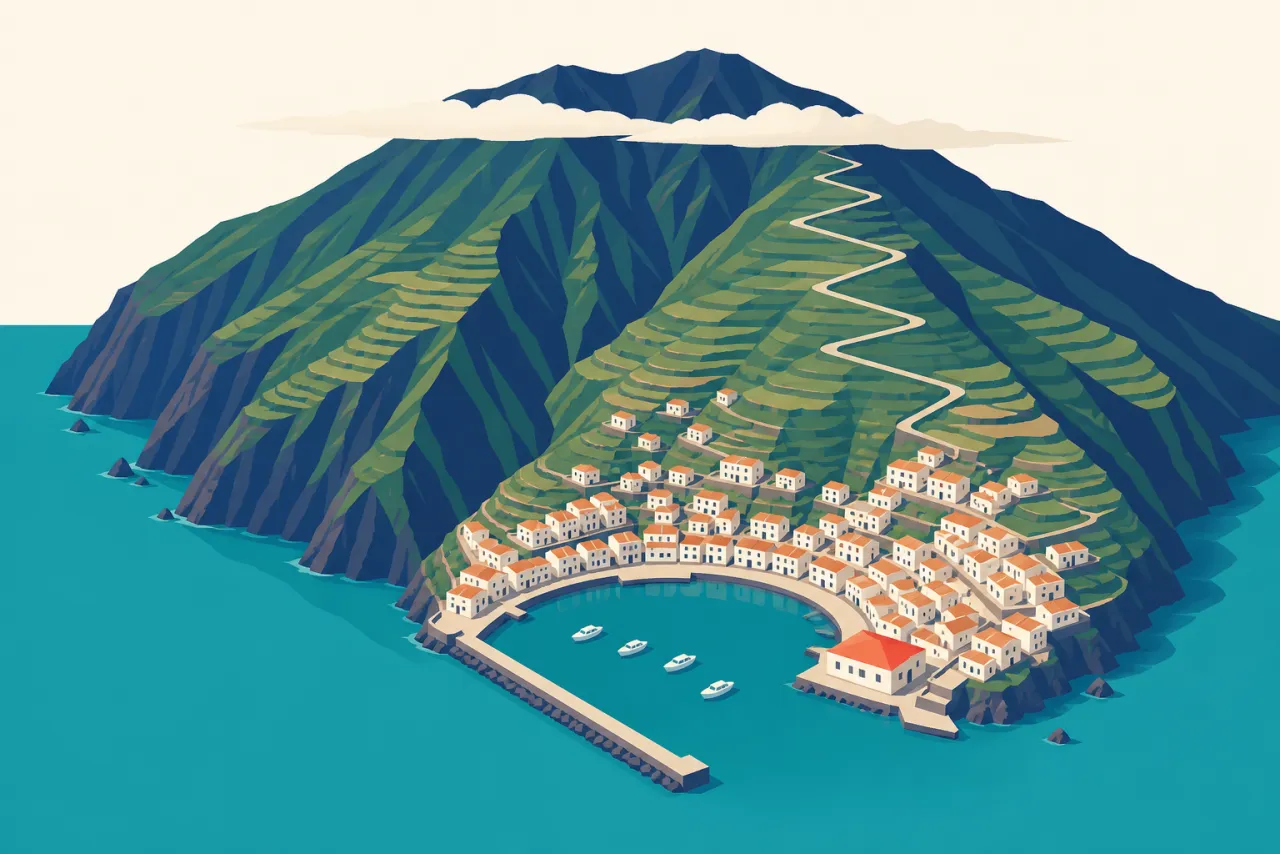
Madeira sits 154th out of 217 in our world ranking, with a FiScore of 4.4 out of 10. It is an autonomous region of Portugal, five hundred kilometres off the Moroccan coast, and it has something mainland Portugal does not: a 5% corporate tax rate.
There is a date to remember, and it is close.
The Madeira International Business Centre
The MIBC, or CINM in Portuguese, is a free zone created with the European Commission's approval, not an exotic arrangement. Companies licensed inside it pay 5% corporate tax.
The right comparison is not the one you usually read. An ordinary company established in Madeira pays 14.7%, the regional rate, and 19% on the Portuguese mainland. The real gap is measured against 14.7%, not against the mainland figure, and it is smaller than the headline suggests. Still large, but smaller.
The date that matters: the regime has been extended to 31 December 2033, but only for entities licensed before 31 December 2026. After that entry date the door closes, at least until a further extension that is not guaranteed.
In other words: a few months left to get in, and eight years to benefit.
The conditions, which are real
This is a European regime, so it is supervised, and substance is not a formality.
Create real jobs in Madeira. Not an address, people.
A minimum investment in the region.
Activity genuinely carried on locally, with an adequate corporate structure and the means to prove it to the Portuguese tax authority.
The benefits are also capped. They cannot exceed 15.1% of the turnover generated in Madeira, 20.1% of the gross value added created locally, or 30.1% of the payroll costs borne in the region, depending on which ceiling applies.
Those ceilings are the heart of the design. A company with no staff and no local activity gets nothing from the 5%, because the ceiling brings its advantage back to zero.
What it does in practice
The MIBC works for a business that genuinely moves part of its operations to Madeira: a team, offices, decisions taken on the island.
It does not work for an invoicing company with nobody in it. That was already true before the substance rules, and it is more so since.
Living in Madeira
A separate question from the corporate one. The island has become an established remote-work destination, with a digital nomad village built to receive it, a stable climate all year and a cost of living below Lisbon's.
On personal tax, Madeira applies the Portuguese regime with reduced regional rates: the scale tops out at 45.1% against 48% on the mainland. That also means NHR is closed here as everywhere to arrivals since 1 January 2024, and that IFICI applies on the same conditions. We set that out in our Portugal guide.
The drawbacks
The end-2026 deadline to enter the regime, which puts the calendar under pressure and invites rushed decisions.
The substance conditions, which rule out light structures and represent a real recurring cost.
Insularity: one major air link, an airport with a difficult reputation, and everything else arriving by sea.
Land is constrained, the island being small and very steep.
So, who is Madeira for?
- A business putting a team on the ground: 5% until 2033 is one of the best regimes in Europe, and it is entirely legitimate.
- A remote worker: a good place to live, but the personal tax is Portugal's, with a modest regional discount.
- An invoicing company with no staff: the ceilings cancel the advantage. It is not built for you.
- Someone hesitating: the 31 December 2026 entry date settles the calendar, not the decision.
The full table of Madeira rates is on our Madeira page, and the comparison tool puts it next to anywhere else. Before deciding anything, read how to actually leave.
Sources
The Madeira International Business Centre, the Portuguese 2026 budget and firms established in Funchal, verified in August 2026. Corporate rates from our own country pages. An error reported to us gets fixed.
This page informs, it does not advise. Before deciding anything, talk to a professional who will look at your situation, as our terms of use set out.