Bahrain sits 7th out of 217 in our world ranking, with a FiScore of 9.7 out of 10. That is the lightest tax system of any country we cover that is not a micro-jurisdiction, and almost nobody outside the Gulf talks about it.
It sits an hour from Dubai and takes considerably less.
The headline numbers
| Tax | Rate |
|---|---|
| Personal income | none |
| Corporate, general | none |
| Corporate, oil and gas | up to 46% |
| VAT | 5% |
There is no personal income tax in Bahrain. None on salaries, none on capital gains, none on inheritance, and no wealth tax.
There is no general corporate income tax either. This is where Bahrain differs from the UAE, which introduced 9% in 2023. Outside oil and gas, a Bahraini company pays nothing on its profits.
Oil and gas activities are the exception, and they are taxed heavily.
The one thing that changed, and who it affects
For financial years starting on or after 1 January 2025, Bahrain applies a Domestic Minimum Top-up Tax of 15%.
It applies only to multinational groups with consolidated revenue above 750 million euros in at least two of the last four financial years. That is the OECD global minimum threshold, and it captures large multinationals only.
Below that threshold, the rate is still zero. Which covers, in practice, every reader of this page.
This matters because the introduction of the DMTT was widely reported as "Bahrain introduces corporate tax", which is misleading for anyone running a normal business.
Why so few people know
Bahrain has been overshadowed by Dubai for two decades, and the reasons are more about marketing than substance.
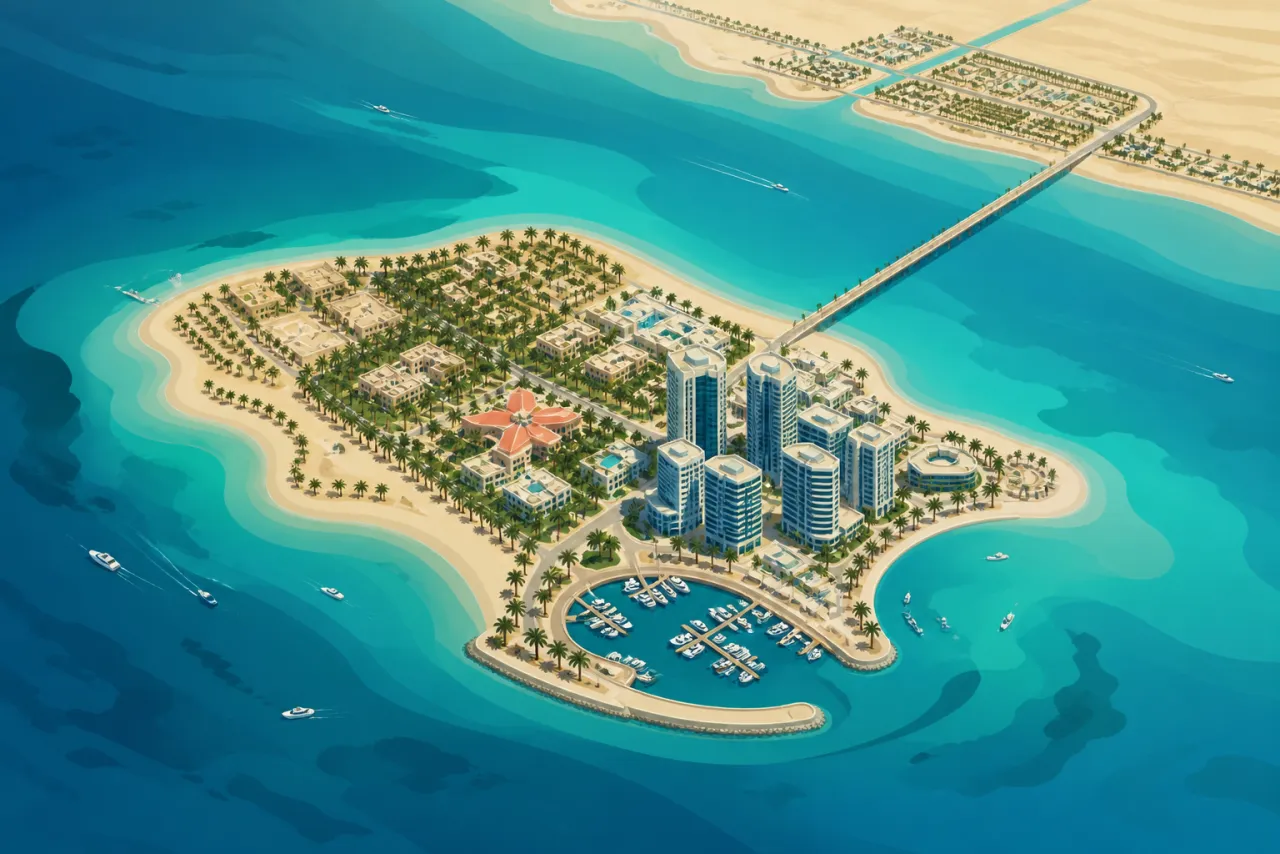
What Bahrain has: a smaller and more relaxed society, considerably lower living costs than Dubai, a long-established financial sector, and a causeway to Saudi Arabia that makes it a natural base for anyone serving the largest Gulf economy.
What it lacks: the flight connectivity, the scale, and the international brand. You will not find the talent pool or the deal flow of Dubai.
Residence
Bahrain offers several routes, including a golden residency for property investors and for people meeting income conditions, plus the usual employment-linked permits.
As everywhere in the Gulf, the document that matters for your former country is a tax residency certificate, which requires genuine presence.
If you are American
The same rule as everywhere in the Gulf, and it is the whole story: the United States taxes on citizenship. Bahrain taking zero means there is no foreign tax credit at all to offset your US bill. Beyond the foreign earned income exclusion, you pay the American rate.
For an American, Bahrain is a lifestyle and cost decision with essentially no tax dividend.
The drawbacks
Scale. Bahrain is small, and a business that needs depth of talent will feel it.
Regional politics. The Gulf is stable in the medium term and complicated in the long one, and Bahrain's internal situation has its own history.
Connectivity. Fewer direct flights than Dubai or Doha, which matters for anyone travelling constantly.
Alcohol, social norms and family considerations differ significantly from Europe, though Bahrain is markedly more relaxed than Saudi Arabia next door.
So, who is Bahrain for?
- Someone serving the Saudi market: the causeway makes this the obvious base, and Riyadh is a short drive.
- A business owner wanting zero corporate tax in a real country: Bahrain still offers what the UAE gave up in 2023.
- Someone priced out of Dubai: the cost gap is substantial.
- Someone needing scale, flights and talent depth: the UAE remains the answer.
The full table of Bahraini rates is on our Bahrain page, and the comparison tool puts it next to anywhere else.
Sources
Figures verified in August 2026 against the Bahrain National Bureau for Revenue, PwC Tax Summaries and the DMTT legislation. An error reported to us gets fixed.
This page informs, it does not advise. Before deciding anything, talk to a professional who will look at your situation, as our terms of use set out.